
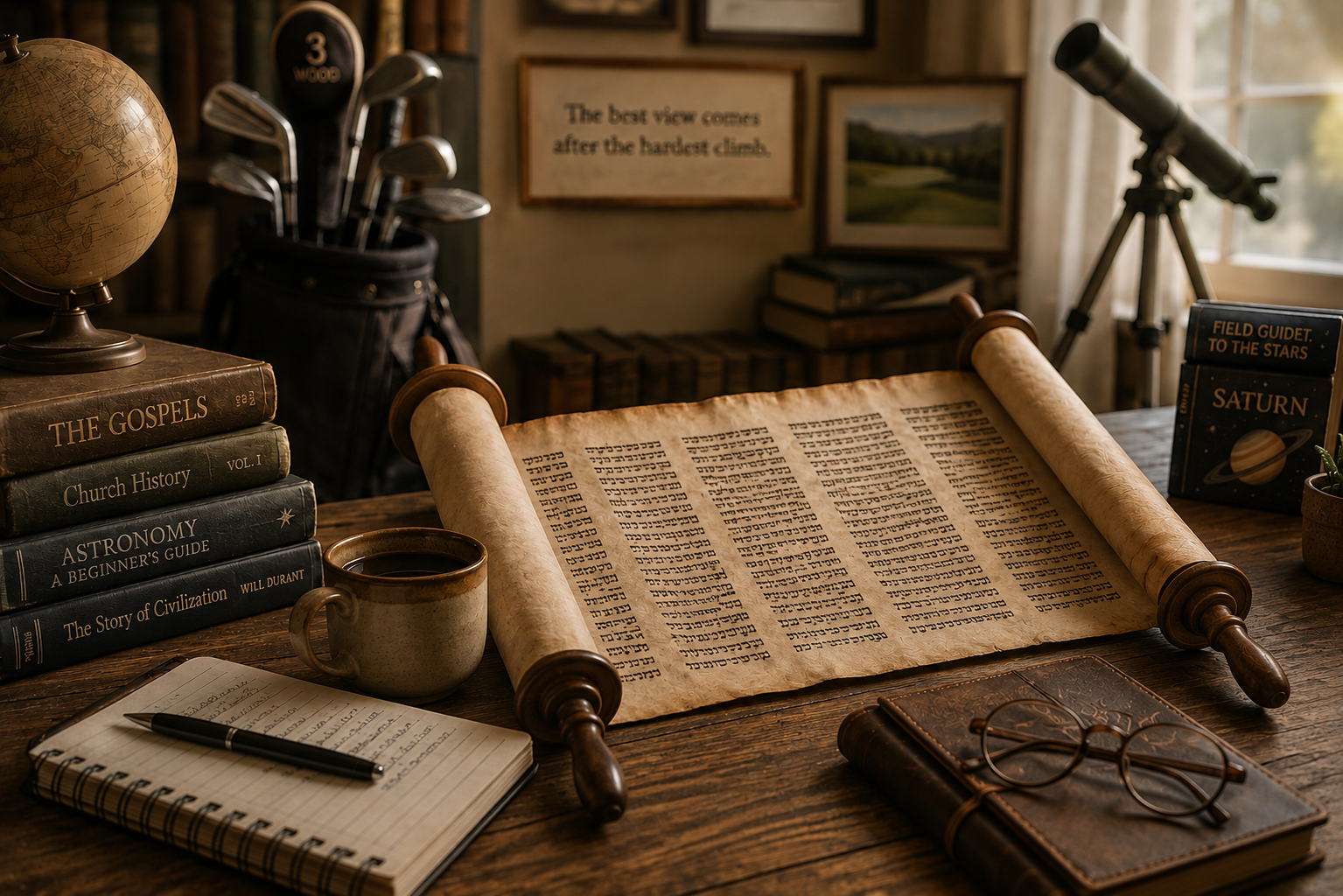
“The amazing value that writers 1,000s of years ago could see right into the 21st century mind.”
I am a big fan of the Bible. I’ve studied it since college, and I’m humbled both by how it presents an all-powerful God and by the simple fact that it is ancient literature.
It’s easy to lose sight of that in a church setting. Someone quotes a commentary on a koine Greek word from the New Testament; someone else raises an ancient Hebrew word from the Old Testament. That depth of study fascinates me, even though I don’t know koine Greek or ancient Hebrew. Because the Bible is a book I read every day, I sometimes forget it’s over 2,000 years old.
This page isn’t about the Bible — but it is about ancient literature, and that includes far more than just the world the Bible was written in.
Where This Is Going
Take that same idea and expand it: The City of God by Augustine, Meditations by Marcus Aurelius, and not-so-ancient-but-still-old works like Gibbon’s The Decline and Fall of the Roman Empire. There’s a lot more here worth our time.
This won’t be a book-of-the-month section. Instead, we’ll occasionally publish a new translation with modern improvements:
- Modern typography
- Readable margins
- Clear chapter and section headings
- A better table of contents
- Modern page numbering
- Editor’s notes explaining historical references
- Sometimes even a timeline
Why do this instead of just pointing you to an existing translation? Mainly so the text is accessible to our readers, and so we can reference specific pages and chapters without worrying about translation differences.
Then we’ll dig into what we’ve found in ancient literature that still works for modern readers.
Come along with me as I read and learn from the classics.

Grace and Peace,
Scott (aka Granddaddy)